




Why Do My Retainers Smell Even After Cleaning?
You clean your retainer every day. You soak it, rinse it, maybe even scrub it — and it still smells. The problem isn't how often you're cleaning. It's how you're cleaning, and what your current method is actually capable of removing. This guide breaks down exactly why the smell persists — and what it actually takes to fix it for good.
Why Retainers Smell in the First Place
Within 30 seconds of placing your retainer in your mouth, over 700 species of oral bacteria begin attaching to its surface. Over the next several hours, these bacteria multiply and form biofilm — a protective, structured community that sticks tightly to the retainer material and is specifically designed to resist being washed away.
A 2022 in vivo study published in PMC/NCBI tracking bacterial microbiome development on clear orthodontic retainers found that microbial composition shifted significantly within the first 24–48 hours of wear, with pathogenic species establishing dominant colonies well before most users would notice any odor. A separate study published in the International Journal of Dental and Medical Sciences Research confirmed that clear retainers showed statistically significant increases in biofilm accumulation compared to baseline, with Lactobacillus counts rising substantially after just two months of wear — concluding that retainer wearers face measurably elevated periodontal risk if cleaning protocols are inadequate.
The bacteria driving the odor include Streptococcus mutans, Staphylococcus aureus, and anaerobic Firmicutes species. As these bacteria break down food particles and salivary proteins, they release volatile sulfur compounds (VSCs) — the same chemical family responsible for bad breath. Critically, research confirms that micro-abrasions and surface irregularities on retainer material actively promote bacterial colonization — which means any cleaning method that scratches the surface makes the underlying odor problem structurally worse over time.
A 2022 study in Frontiers in Dental Medicine further found that orthodontic appliances significantly altered the oral microbiome within one month of use, independent of appliance type — reinforcing why retainer hygiene requires a method capable of disrupting established biofilm, not merely rinsing the surface.
So Why Does It Still Smell AFTER You've Cleaned It?
This is the question most guides fail to answer. Here are the five real reasons your retainer keeps smelling despite regular cleaning.

Reason 1 — Your Cleaning Method Is Masking the Smell, Not Removing It
Effervescent cleaning tablets and soaking solutions work by chemically softening and partially dissolving biofilm — but they don't physically remove it. After soaking, biofilm that isn't fully broken down remains attached to the surface. The fresh "clean" scent you notice immediately after soaking fades within hours as the surviving bacteria resume activity and continue producing VSCs.
Rinsing with water has the same limitation: it flushes away loose particles but leaves the bonded biofilm layer almost completely intact.
Reason 2 — Your Cleaning Method Is Creating More Hiding Spots
This is the most counterproductive mistake — and it's extremely common:
- Brushing with toothpaste: Most toothpastes contain abrasive particles designed to scrub tooth enamel. On a retainer's smooth thermoplastic surface, those particles create microscopic scratches. Each scratch is a new place for bacteria to hide, protected from cleaning solutions and rinsing. The more you brush with toothpaste, the more surface area bacteria have to colonize — and the harder the smell becomes to eliminate.
- Rinsing with hot water: Heat causes thermoplastic retainer material to warp slightly. Even minor warping creates new micro-gaps and surface irregularities — more bacterial hiding spots.
- Soaking in mouthwash: The alcohol in most mouthwashes dries out and micro-cracks retainer material over time, again creating more surface area for bacterial adhesion.
Reason 3 — Calcium Deposits Are Locking In the Odor
Your saliva contains calcium and phosphate minerals. Over time, these minerals deposit onto your retainer surface and harden into calcified deposits — essentially the same material as dental tartar. Once calcified, these deposits form a physical shield over the bacteria underneath, protecting them from cleaning solutions, soaking, and physical scrubbing alike.
This is why a retainer that looks clean under normal light can still produce strong odor. The bacteria causing the smell are sealed underneath a mineralized layer that surface-level cleaning cannot penetrate.
Reason 4 — Your Retainer Case Is Re-Contaminating It
This is one of the most overlooked causes of persistent retainer odor — and it creates a frustrating loop: you clean your retainer carefully, place it into its case, and within hours it smells again. The case is the problem.
A retainer case is warm, frequently moist, and almost never cleaned. These are ideal bacterial growth conditions. If your retainer case smells — even faintly — it contains an established bacterial population that will transfer directly onto your retainer every time you store it. The contact time needed for re-contamination is minutes, not hours.
Reason 5 — Micro-Cracks You Can't See
After months or years of use, retainer material develops hairline micro-cracks that are invisible to the naked eye but large enough to harbor bacteria. Standard cleaning methods — soaking, rinsing, even brushing — cannot reach inside these cracks. Bacteria that colonize micro-cracks are effectively permanent residents: protected from cleaning, continuously producing VSCs, and impossible to dislodge with surface-level methods.
When you've tried everything and the smell keeps returning within hours of cleaning, micro-cracks are often the explanation. At this stage, the retainer may need to be replaced rather than cleaned more aggressively.
Does Your Retainer Type Make a Difference?
Yes — and this distinction is almost never discussed. The material your retainer is made from significantly affects how prone it is to persistent odor:
| Retainer Type | Odor Risk | Why |
|---|---|---|
| Clear thermoplastic (Essix / Invisalign-style) | 🔴 Highest | Porous material absorbs odors and stains; scratches easily; most common type |
| Hawley (wire + acrylic plate) | 🟡 Moderate | Acrylic base is porous; metal wire harbors deposits at contact points |
| Fixed lingual (bonded) | 🟢 Lower | Not removable so no storage issue; requires professional cleaning |
If you wear a clear thermoplastic retainer — the most common type today — you're working with a material that is inherently more absorbent and more easily damaged by aggressive cleaning methods. Getting the cleaning method right matters more for this type than any other.
The Cleaning Methods That Actually Work (Ranked)
| Cleaning Method | Removes Biofilm? | Reaches Micro-Scratches? | Breaks Down Calcium? | Safe for Retainer? |
|---|---|---|---|---|
| Water rinse | ❌ No | ❌ No | ❌ No | ✅ Yes |
| Toothbrush + toothpaste | ⚠️ Partial | ❌ No (creates more) | ❌ No | ❌ Causes damage |
| Effervescent tablets / soaking | ⚠️ Softens only | ❌ No | ⚠️ Partial | ✅ Short-term |
| White vinegar or baking soda | ⚠️ Partial | ❌ No | ⚠️ Partial | ⚠️ Corrosive with frequent use |
| Mouthwash soak | ⚠️ Masks odor | ❌ No | ❌ No | ❌ Dries and cracks |
| Ultrasonic cleaning (Voraiya) | ✅ Complete | ✅ Penetrates | ✅ Breaks down | ✅ No abrasion |
Why Ultrasonic Cleaning Is Fundamentally Different
Ultrasonic cleaners work through a process called acoustic cavitation: high-frequency sound waves (measured in kHz) pass through water and create millions of microscopic bubbles per second. When these bubbles collapse, they release tiny but intense shockwaves that physically dislodge biofilm, break apart calcium deposits, and penetrate micro-scratches and surface irregularities that no liquid or brush can reach.
This is not a variation of soaking or scrubbing — it is a different physical mechanism entirely. It removes what other methods leave behind.
The Long-Term Cost Argument
If you're weighing the switch from cleaning tablets to an ultrasonic cleaner, the two-year math makes the decision straightforward:
| Method | Monthly Cost | 2-Year Total | Biofilm Removal |
|---|---|---|---|
| Cleaning tablets (Retainer Brite, Polident, etc.) | ~$5–8 | ~$120–192 | ⚠️ Surface only |
| DIY methods (vinegar, baking soda) | ~$1–2 | ~$24–48 | ⚠️ Partial |
| Voraiya Oral Pod (one-time) | $0 after purchase | ~$59.99 total | ✅ Deep removal |
| Voraiya Oral Station (one-time) | $0 after purchase | ~$89.99 total | ✅ Deep removal |
Daily cleaning cost of owning a Voraiya ultrasonic cleaner after 12 months of daily use: under $0.10 per day.
The cost of a retainer replacement due to material degradation from improper cleaning: typically $150–$500 depending on your orthodontist — a figure that makes even a premium ultrasonic cleaner look like preventive maintenance, not a discretionary purchase.
The Best Ultrasonic Retainer Cleaners for Eliminating Odor

Voraiya Oral Station
- 45kHz frequency — fine, high-density cavitation for thorough biofilm removal
- UV-C sterilization — eliminates 99.9% bacteria and fungal spores
- 6-minute cycle — cleans all surfaces simultaneously, including unreachable areas
- Zero abrasion — no new micro-scratches created during cleaning
- Universal compatibility — clear retainers, Hawley, aligners, dentures, night guards
- 30-day money-back guarantee + 1-year warranty
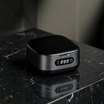
Voraiya Oral Pod
- 45–52kHz precision frequency — fine, thorough cleaning action
- 3 smart modes — Quick Wash (3 min), Standard (5 min), Deep Sanitization (8 min)
- 166ml compact tank — travel-ready, fits desk or bathroom counter
- One-touch operation — no complicated settings
- 1-year warranty included
Your Daily & Weekly Routine to Eliminate Odor for Good
📅 Every Day
- Remove your retainer and rinse immediately under cool water — loosens fresh, unattached debris before it bonds
- Run a full ultrasonic cleaning cycle (6–8 minutes with Voraiya) — removes biofilm, VSC-producing bacteria, and early-stage mineral deposits
- Let it dry completely before storing — moisture is what allows bacteria to proliferate inside a closed case
- Place into a clean, dry case — never a damp or previously uncleaned one
📅 Every Week
- Wash your retainer case with mild dish soap, rinse thoroughly, and let it air dry completely
- Inspect your retainer under good lighting for discoloration, white mineral deposits, or physical damage
- If you notice a white or yellowish film that doesn't respond to standard cleaning, run an additional 8-minute Deep Sanitization cycle
5 Habits Making Your Retainer Smell Worse
| Habit | Why It Makes Things Worse |
|---|---|
| Brushing with toothpaste | Creates micro-scratches — permanent bacterial hiding spots that worsen with every scrub |
| Rinsing with hot water | Warps thermoplastic material — creates new gaps and surface irregularities |
| Soaking in mouthwash | Alcohol dries and micro-cracks retainer material over time |
| Storing while still wet | Creates ideal bacterial growth conditions inside the sealed case |
| Ignoring the retainer case | Case re-contaminates a freshly cleaned retainer within minutes |
When Cleaning Won't Help Anymore — Time to Replace?
| Symptom | What It Means | Action |
|---|---|---|
| Smell returns within 1–2 hours of cleaning | Deep bacterial colonization in micro-cracks | Try 3+ consecutive days of ultrasonic Deep Sanitization; if no improvement, consult orthodontist |
| Persistent white or yellow patches after cleaning | Calcified deposits embedded in material | Extended ultrasonic cycle; if unchanged, replacement likely needed |
| Visible discoloration or cloudiness | Material degradation; increased porosity | Consider replacement |
| Retainer no longer fits snugly | Warping from heat or material aging | Replace immediately |
| Over 2 years of consistent daily wear | Normal material lifespan reached | Schedule replacement with your orthodontist |
Frequently Asked Questions
Why does my retainer smell like sulfur or rotten eggs even after I clean it?
Sulfur and rotten-egg odor is caused by volatile sulfur compounds (VSCs) — a specific byproduct of anaerobic bacteria in mature biofilm. If this smell persists after cleaning, the cleaning method is softening or masking the biofilm but not physically removing it. Ultrasonic cleaning's cavitation mechanism physically disrupts biofilm that chemical soaking cannot reach, including bacteria sheltered inside micro-scratches and beneath calcium deposits.
Why does my retainer smell bad after just one day of wear?
Biofilm begins forming within 30 seconds of retainer insertion and reaches a mature, VSC-producing state within 24 hours — so some odor after a full day of wear is biologically normal. A faint smell that clears with cleaning is not a concern. But if your retainer smells strongly after just a few hours, or if odor persists immediately after cleaning, bacteria have colonized micro-scratches or calcium deposits where surface cleaning can't reach.
Why does my retainer still smell after soaking in cleaning tablets?
Cleaning tablets chemically soften biofilm but don't physically remove it. Remaining biofilm regenerates quickly, and bacteria resume VSC production within hours of the soak. Tablets also have no mechanism for penetrating micro-scratches or breaking down calcified deposits. This is why soaking produces diminishing returns on retainers with persistent odor.
Can I use hydrogen peroxide to get rid of retainer smell?
A brief soak in diluted hydrogen peroxide (equal parts H₂O₂ and water, no longer than 30 minutes) can reduce surface bacteria as an occasional treatment. It is not safe for regular daily use — prolonged exposure degrades thermoplastic retainer material over time — and it is not effective against biofilm inside micro-scratches or beneath calcium deposits.
Still dealing with retainer odor after cleaning?
Voraiya Oral Station — 45kHz Ultrasonic + UV-C Sterilization.
Physically removes biofilm, calcium deposits, and VSC-producing bacteria in one 6-minute cycle.
700+ Verified Reviews · 30-Day Money-Back Guarantee
Shop the Oral Station →For additional guidance on retainer care and replacement schedules, consult your orthodontist or refer to the American Association of Orthodontists.


