




Best Aligner Cleaner: Machine vs Foam vs Tablets
If you wear clear aligners every day, keeping them clean is just as important as wearing them for the recommended number of hours. Over time, saliva, food particles, and plaque can build up on the surface of aligners, making them look cloudy, develop odors, or feel less comfortable to wear.
With so many products available, choosing the best aligner cleaner can be confusing. Some people prefer cleaning tablets, while others use foam cleaners or ultrasonic cleaning machines. Each method offers different advantages depending on your daily routine, cleaning preferences, and the level of maintenance you need.
Rather than asking which product is universally the best, it's more helpful to understand how each cleaning method works and which one best fits your lifestyle. In this guide, we'll compare aligner cleaning machines, cleaning foams, and cleaning tablets to help you decide which option is right for your daily oral care routine.
Why Cleaning Your Aligners Matters
Clear aligners are typically worn for 20–22 hours a day, meaning they remain in constant contact with your teeth and saliva. Without regular cleaning, residue can gradually build up on the aligners, affecting both their appearance and freshness. A consistent cleaning routine helps to:
- Remove food particles and everyday debris
- Reduce plaque buildup on the aligner surface
- Keep aligners looking clearer
- Minimize unpleasant odors
- Improve overall wearing comfort
Cleaning your aligners every day is usually much easier than trying to remove heavy buildup after several days of neglect. For this reason, many orthodontists recommend making aligner cleaning part of your daily oral hygiene routine.
Option 1: Ultrasonic Cleaning Machines
Ultrasonic cleaning machines have become increasingly popular among aligner users because they provide a simple, hands-free cleaning experience. Instead of relying on manual brushing, ultrasonic cleaners use high-frequency sound waves to create microscopic bubbles in water. This process, known as cavitation, helps loosen debris from the surface of the aligners, including areas that are difficult to reach manually.
Many users appreciate ultrasonic cleaning because it:
- Requires very little effort
- Uses a water-based cleaning process
- Cleans detailed surfaces effectively
- Fits easily into a daily routine
- Can also clean retainers, dentures, and night guards
Some users choose to use clean water for daily maintenance, while others occasionally add an ultrasonic-compatible cleaning solution for deeper cleaning. For people looking for the best aligner cleaner, an ultrasonic machine offers a convenient long-term solution.
Option 2: Aligner Cleaning Foam
Cleaning foam is another popular choice, particularly for people who want a quick cleaning option during the day. Most aligner foams are applied directly to the aligners before wearing them or after rinsing. Some advantages of cleaning foam include:
- Easy to carry when traveling
- Quick application
- No soaking container required
- Convenient for use outside the home
However, cleaning foam generally relies on manual application and does not provide the physical cleaning action produced by ultrasonic technology. For this reason, many users treat foam as a convenient supplement rather than their primary cleaning method.
Option 3: Cleaning Tablets
Cleaning tablets have been used for many years to clean dentures and other removable dental appliances. Typically, a tablet is dissolved in water, and the aligners are soaked for a specified amount of time according to the manufacturer's instructions. Cleaning tablets can be useful for occasional deeper cleaning.
However, they also have some considerations:
- They require soaking time.
- Tablets need to be purchased regularly.
- Different products may use different cleaning ingredients.
- Some users prefer not to rely on chemical cleaners every day.
Machine vs Foam vs Tablets: Which Is the Best Aligner Cleaner?
The right choice depends on your daily routine, how much time you want to spend cleaning, and whether you prefer a reusable device or disposable cleaning products.
| Cleaning Method | Advantages | Considerations |
|---|---|---|
| Ultrasonic Machine | Hands-free, reusable, water-based, cleans hard-to-reach areas. | Requires an initial device investment. |
| Cleaning Foam | Fast, portable, easy to apply while on the go or traveling. | Requires manual application and repurchasing. |
| Cleaning Tablets | Familiar method, good for occasional deep cleaning. | Requires soaking time and continuous replacement. |
For many aligner users, the best approach isn't choosing only one method. Instead, they combine techniques: use an ultrasonic cleaner for everyday maintenance, use cleaning tablets occasionally for deeper cleaning, and carry cleaning foam while traveling.
Voraiya Oral Station — A Convenient Everyday Aligner Cleaner
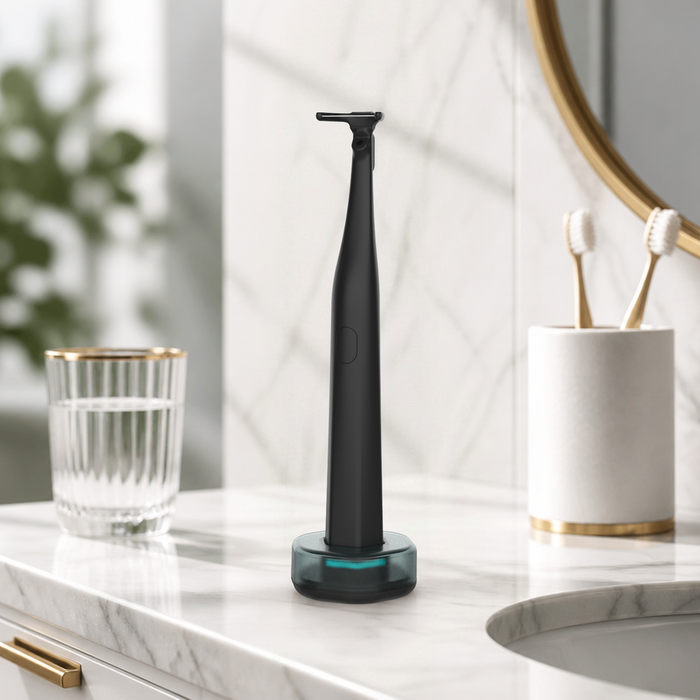
For users looking for the best aligner cleaner, convenience matters as much as cleaning performance. The Voraiya Oral Station is designed specifically for removable dental appliances, providing a simple water-based ultrasonic cleaning process.

Voraiya Oral Station
- Aligner-Safe 45kHz Tech: Gently removes plaque and debris from clear aligners and retainers.
- Hands-Free Cleaning: Just one button and 5 minutes for a professional-grade clean.
- Long-Term Value: Reusable device that eliminates the need for daily chemical tablets.
$79.99
Shop Oral Station →How to Choose the Best Aligner Cleaner
If you're still deciding, consider these factors:
- Your Daily Routine: If you wear aligners 22 hours a day, you need a method that is quick and easy to repeat consistently.
- Convenience: Some methods require measuring or buying consumables. Others simply require fresh water and a button press.
- Long-Term Cost: Foam and tablets need replacement, adding ongoing costs. A machine is a one-time investment.
- Multiple Appliances: If you use retainers or night guards as well, an ultrasonic cleaner offers the most flexibility.
Frequently Asked Questions
What is the best aligner cleaner?
The best cleaner depends on your lifestyle. Ultrasonic machines are ideal for convenient daily maintenance, while foam is great for travel, and tablets are useful for occasional deep soaks.
Are ultrasonic cleaners safe for clear aligners?
Yes. Most ultrasonic cleaners designed for oral appliances use frequencies (like 45kHz) that are safe for plastic aligner materials when used with cool or lukewarm water.
Can I use only water in an ultrasonic cleaner?
Yes. Many users find that fresh water combined with ultrasonic cavitation is sufficient for daily aligner maintenance.
Are cleaning tablets better than ultrasonic cleaners?
Not necessarily. They work differently. Tablets use chemicals to clean, while machines use sound waves. Many people use a machine daily and a tablet once a week for extra deep cleaning.
Can one ultrasonic cleaner clean different dental appliances?
Yes. Devices like the Voraiya Oral Station are versatile and can clean dentures, retainers, aligners, and night guards effectively.
Final Thoughts
Finding the best aligner cleaner is about finding a method that fits naturally into your daily routine. Cleaning foams offer portability, tablets provide deep soaking, and ultrasonic machines deliver a convenient, reusable solution for everyday maintenance. By establishing a consistent cleaning routine, you can keep your aligners clean, comfortable, and ready to wear every day.
Professional Aligner Care Made Easy
Stop scrubbing and start vibrating. Keep your aligners crystal clear with the Voraiya Oral Station.
30-Day Money-Back Guarantee · Fast & Free Shipping Over $50
Shop All Cleaners → View Oral Station →
Disclaimer: This article is for general informational purposes only and does not constitute dental advice. Consult your dentist for specific appliance care.
```


