


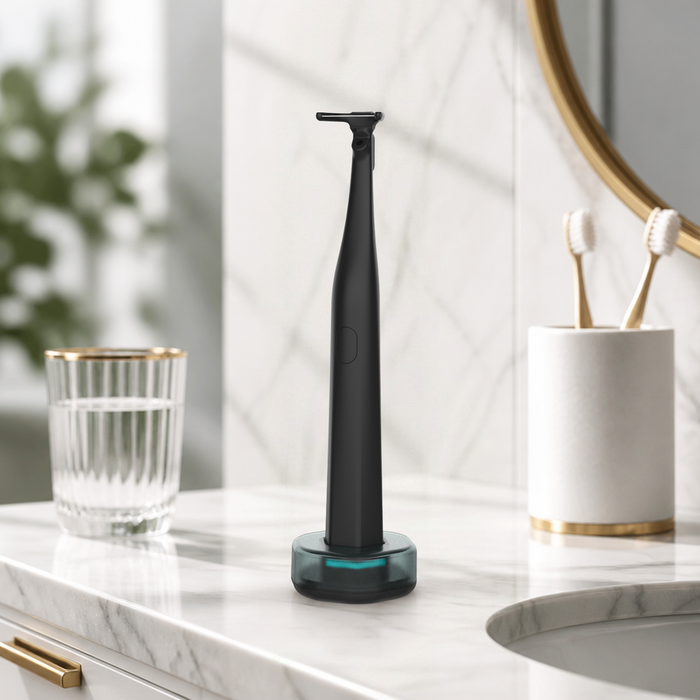


Electric Flosser vs String Floss: Which Is Better?
If you are comparing an electric flosser vs string floss, the better choice depends on how comfortably and consistently you can clean between your teeth. This guide compares handling, technique, tight contacts, convenience, and daily use so you can choose based on fit and routine — not on the idea that one method is automatically best for everyone.
Side-by-Side Comparison
| Method | Best For | Movement | Handling | Daily Routine | Notes |
|---|---|---|---|---|---|
| Voraiya Guided Flosser | Users who want extra visibility and handle control | Real dental floss with 3 sonic modes | LED guidance + soft Bite Pad | Fresh head after each session | Combines powered movement with real floss; the tongue scraper also works as a Bite Pad |
| Voraiya Origin Flosser | Users who want a simpler electric flossing routine | Real dental floss with 3 sonic modes | Handle-based control | Fresh head after each session | Core sonic flossing option without a tongue scraper or Bite Pad |
| Traditional String Floss | Users who want direct control over the floss length and shape | Manual rubbing and C-shape technique | Finger-based control | New section of floss for each tooth area | Flexible and widely available; technique and pressure matter most |
The American Dental Association recommends cleaning between teeth once a day with floss or another suitable interdental cleaner. Product features and bundles may change, so check the current manufacturer pages before purchasing.
How to Read the Table
The most important difference in electric flosser vs string floss is how the floss is handled. String floss gives you direct control over the length, angle, and C-shape around each tooth. An electric flosser adds a handle and powered movement while still placing real floss between the teeth.
That does not make one method universally superior. The American Dental Association explains that floss and other interdental cleaners help remove debris and plaque from surfaces a toothbrush cannot reach. The ADA also notes that the choice should relate to the characteristics of the individual, including how tight the spaces are and which technique can be used effectively.
Method-by-Method Notes
Voraiya Guided Flosser
Guided Flosser is designed for users who want more visual and physical guidance than traditional string floss provides. Its angled LED light helps illuminate the flossing path, while the textured soft Bite Pad can help stabilize the handle when you gently bite down during insertion. The same component also works as a tongue scraper. It includes three vibration modes and 50 replaceable floss heads.
The Bite Pad is for control, not leverage. If a contact feels blocked or the floss requires strong pressure, do not force it through. The product page recommends gentle guidance and light pressure, especially when working around tight contacts or areas that are difficult to see.
Voraiya Origin Flosser
Origin Flosser is a simpler electric alternative for users who want a handle-based sonic routine without the additional guidance features. Its product information lists Milder, Clean, and Quick modes, up to 14,000 vibrations per minute, a 60-day battery, IPX7 water resistance, and 50 replacement heads.
Origin Flosser does not include a tongue scraper or Bite Pad. Compared with string floss, its main difference is the handle and sonic movement. Compared with Guided Flosser, it keeps the product experience more focused on basic electric flossing.
Traditional String Floss
String floss remains a flexible and low-cost option because you can control the length, tension, and position yourself. The ADA recommends guiding floss between the teeth with a gentle rubbing motion, curving it into a C shape against one tooth, and moving it along the tooth surface. The floss should not be snapped into the gums.
Its main limitation is handling. Some people find it difficult to reach back molars, work around dental appliances, or maintain a daily routine when finger-based flossing feels awkward. In those situations, a powered handle may make the habit easier to repeat, but it still needs careful technique.
Electric Flosser vs String Floss: Which Is Easier?
String floss is usually easier to store, replace, and carry because it does not require a device or charging routine. It also gives experienced users precise control around each tooth. For people who already floss comfortably and consistently, there may be no practical reason to switch.
An electric flosser may feel easier when finger positioning, limited reach, or visual access makes traditional flossing difficult. The handle can reduce the need to wrap floss around your fingers, while sonic movement can support a steady motion. Guided Flosser adds an LED and Bite Pad for users who want more guidance. Origin Flosser offers a simpler handle-based alternative.
The most useful method is often the one you can use correctly and maintain regularly. Convenience matters because an ideal technique is not helpful if the tool stays unused.
How to Choose
- Choose string floss if you want the lowest-cost, most flexible option and can comfortably reach every tooth surface.
- Choose Voraiya Guided Flosser if LED visibility, a soft Bite Pad, a tongue scraper, and 50 included heads are important to your routine.
- Choose Voraiya Origin Flosser if you want a straightforward sonic flosser with three modes and no tongue scraper or Bite Pad.
- Compare technique before power: neither an electric flosser nor string floss should be forced through a tight or painful contact.
- Ask your dentist if you have braces, implants, bridges, gum symptoms, or a space where floss repeatedly catches or shreds.
Voraiya Options at a Glance
Voraiya Guided Flosser
- LED guidance light for better visibility
- 12,000 / 14,000 / 18,000 VPM across 3 modes
- Textured soft Bite Pad for gentle handle stabilization
- Dual-purpose tongue scraper and 50 replaceable floss heads
- Cordless charging base, USB-C support, and IPX7 handle

Voraiya Origin Flosser
- Up to 14,000 VPM sonic flossing
- 3 modes — Milder, Clean, and Quick
- 50 replacement heads included
- 60-day battery and IPX7 waterproof handle
- No tongue scraper or Bite Pad
Technique Matters More Than the Device
With string floss, use a clean section as you move from tooth to tooth. Guide the floss gently through the contact, curve it around one tooth, and clean the side of the tooth before repeating on the neighboring surface. Avoid pressing the floss sharply into the gum tissue.
With an electric flosser, attach a fresh head, select a comfortable mode, and guide the floss slowly. Let the handle and vibration support your movement rather than forcing the floss through resistance. Remove the head gently after use and follow the product instructions for cleaning and replacement.
In either case, pain, persistent bleeding, swelling, or repeated floss breakage should not be treated as a reason to apply more pressure. A dentist can check whether the contact, gum tissue, restoration, or cleaning method needs attention.
Find the flossing routine you will keep
Choose direct string-floss control or a handle-based electric routine with sonic support.
Guided Visibility · Sonic Vibration · Traditional Floss Control
Shop Guided Flosser → Shop Origin Flosser →This article is for general informational purposes only and does not constitute dental advice. The American Dental Association recommends cleaning between teeth once a day with floss or another suitable interdental cleaner. Consult your dentist for advice specific to your teeth, gums, orthodontic treatment, implants, bridges, or other dental restorations.


