


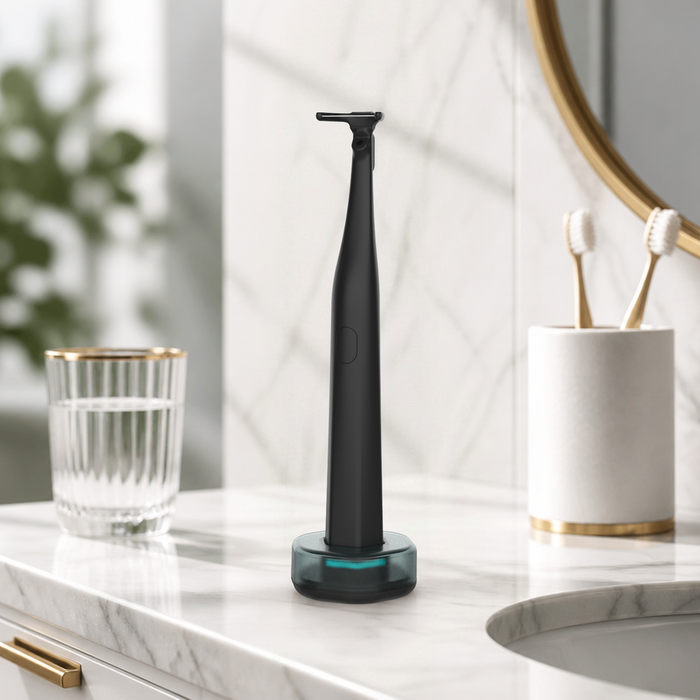


Electric Flosser vs Water Flosser for Implants: Which Is Better?
If you have a dental implant, keeping the surrounding teeth and gumline clean is an important part of your long-term oral care routine. This often leads to a common question: electric flosser vs water flosser for implants — which option is more suitable?
Electric flossers and water flossers use different cleaning methods. An electric flosser uses high-frequency vibration and a flossing head, while a water flosser uses a stream of water to rinse around teeth and along the gumline.
Both devices may be useful for some people with fully restored dental implants. However, the best tool depends on your implant design, the condition of your gums, your dental professional's instructions, and the way you can use the device most consistently.
This guide explains the differences between an electric flosser and a water flosser for implants, what to consider before choosing one, and how Voraiya's sonic flosser options fit into an everyday oral care routine.
Can You Use an Electric Flosser or Water Flosser with Dental Implants?
Many people with completed implant treatment use specialized interdental cleaning tools as part of their daily maintenance routine. However, the correct method can vary depending on whether you have a single implant, an implant-supported bridge, an implant-supported denture, or another type of restoration.
If your implant is still healing, or if you have recently had implant surgery, do not begin using a new electric flosser or water flosser without approval from your dentist or oral surgeon. Healing tissues require specific care instructions.
After your implant has been restored, your dental professional can advise you on:
- Which flossing or interdental cleaning method to use.
- How much pressure or vibration is appropriate.
- Whether implant-specific floss, an interdental brush, or a water flosser is recommended.
- How to clean beneath an implant-supported bridge or around an implant crown.
- How often you should attend professional maintenance appointments.
A home-care device should support your professional care plan, not replace it.
Electric Flosser vs Water Flosser for Implants: The Main Difference
The biggest difference is how each device reaches the area around the implant and gumline.
- Electric flosser: Uses a vibrating flossing head that you guide between the teeth and along the gumline.
- Water flosser: Uses a pressurized stream of water to rinse around the teeth, gumline, and selected dental restorations.
- Implant floss or threader: Uses specially shaped floss to access areas that may be difficult to reach with standard string floss.
- Interdental brush: Uses a small brush to clean between teeth or around certain restorations when recommended by a dental professional.
These tools are not interchangeable in every situation. For example, the space beneath an implant-supported bridge may require a specific cleaning technique that is different from cleaning around a single implant crown.
How Does a Water Flosser Work Around Implants?
A water flosser directs a stream of water between the teeth and around the gumline. The water can help rinse away food particles and loosened debris from areas that are difficult to reach with a toothbrush.
Some people prefer a water flosser for implants because the device does not require them to guide string floss beneath a bridge or around a restoration. Certain water flossers also include pressure settings or specialized tips.
When using a water flosser around an implant, follow the settings and technique recommended by your dentist. Avoid directing water with excessive pressure into tender or healing tissue, and do not assume that the highest setting provides the best clean.
How Does an Electric Flosser Work Around Implants?
An electric flosser uses a small motor to create high-frequency vibrations in the flossing head. You guide the head between the teeth and along the gumline with gentle pressure.
Some people prefer an electric flosser because it provides a compact, cordless routine without a water reservoir. The vibrating head can also make the motion feel more guided than manually moving traditional string floss.
However, an electric flosser should be used carefully around dental implants. Do not force the flossing head into tight contacts, press aggressively against the gumline, or use it over an area that is still healing unless your dental professional has specifically approved the technique.
Electric Flosser vs Water Flosser for Implants: Advantages and Limitations
Potential Advantages of a Water Flosser
A water flosser may be a practical choice for people who prefer water-based interdental cleaning. It can be especially convenient when a dental professional has recommended rinsing around a bridge, implant crown, or other restoration.
- Uses water rather than a vibrating flossing head.
- Can rinse around the gumline and selected dental restorations.
- May offer adjustable pressure settings.
- Can be easier for some users who have difficulty handling string floss.
- May help clean around complex dental work when used with professional guidance.
Water flossers also have limitations. They usually require a reservoir, access to a sink, and regular cleaning of the tank and tips. Some users find the water spray messy, especially when they are still learning the correct technique.
Potential Advantages of an Electric Flosser
An electric flosser may appeal to users who want a compact, rechargeable, and less water-dependent routine.
- Does not require a water reservoir.
- Can be easier to store in a small bathroom.
- Provides a cordless and portable cleaning experience.
- Uses vibration to support a guided flossing motion.
- May be easier to use consistently for people who dislike water splashing.
- Can include multiple vibration modes for different comfort preferences.
An electric flosser also has limitations. It may not be the right tool for every implant restoration, and the flossing head must be guided carefully. Always follow the technique recommended by your dentist or implant specialist.
Which Is Better for Implant-Supported Bridges?
Implant-supported bridges can create spaces beneath the restoration where food particles and plaque may collect. Cleaning these areas often requires a specific technique because a regular toothbrush cannot reach every surface.
A water flosser may be recommended for rinsing around and beneath certain bridge designs. An interdental brush, implant floss, or floss threader may also be part of the routine.
Some users may prefer an electric flosser for the areas between individual teeth, but it should not automatically be considered a replacement for the tool recommended for cleaning underneath the bridge.
If you have an implant-supported bridge, ask your dental professional to demonstrate the correct cleaning path. The ideal routine may combine more than one interdental cleaning method.
Which Is Better for a Single Dental Implant?
For a single implant crown, both a water flosser and an electric flosser may be considered depending on the design of the restoration and the health of the surrounding gum tissue.
A water flosser can rinse around the crown and gumline, while an electric flosser can provide a compact vibrating flossing routine between adjacent teeth. The right choice is not determined by the device category alone.
If you are searching for the best flosser for implants, focus on the following questions:
- Has your implant fully healed and been cleared for normal home care?
- Which method has your dentist or hygienist recommended?
- Can you control the pressure or vibration comfortably?
- Can the device reach the spaces around your restoration?
- Will you use the device consistently?
- Is the device easy to clean and maintain?
Are Sonic Flossers Safe for Implants?
A sonic flosser is not automatically suitable for every implant situation. Safety depends on the condition of the tissue, the type of restoration, the device design, and the technique used.
For a fully restored implant, a dental professional may approve an electric flosser as part of a broader home-care routine. Use the lowest comfortable setting at first, move slowly, and avoid pressing the flossing head directly into the gum tissue.
Do not use a sonic flosser over a surgical site, irritated tissue, or a healing implant unless your dentist or oral surgeon has given you specific instructions to do so.
If you notice bleeding, swelling, persistent discomfort, a loose restoration, or a change in the way your implant fits, stop using the device and contact your dental professional.
Voraiya Electric Flossers for Daily Oral Care
Voraiya offers two cordless sonic electric flossers for users who want a more structured and convenient way to clean between their teeth. Both devices feature multiple modes, IPX7 waterproof protection, and long battery endurance.
They are designed for everyday oral care, but people with dental implants should confirm that the device and technique are appropriate for their specific restoration before use.
Voraiya LED-Guided Electric Flosser Kit
The Voraiya LED-Guided Electric Flosser Kit is designed for users who want visual guidance while cleaning between the teeth and along the gumline. Its targeted LED light helps illuminate tight, hard-to-see spaces, which may make it easier to guide the flossing head with greater awareness.
Voraiya LED-Guided Electric Flosser Kit
- Targeted LED Guidance
- Three Sonic Modes
- IPX7 Waterproof Design
- 60-Day Battery Life
$99.99
Shop Guided Flosser →The LED-guided design may be useful for people who want a clearer view of the cleaning path. If you have an implant, use the mode and technique recommended by your dental professional and do not force the flossing head around the restoration.
Voraiya Origin Flosser Electric Flosser Kit
The Voraiya Origin Flosser Electric Flosser Kit focuses on everyday value, portability, and a complete supply of replacement heads. It provides up to 14,000 vibrations per minute and includes 50 replacement flossing heads.

Voraiya Origin Flosser Electric Flosser Kit
- Three Smart Modes
- IPX7 Waterproof Design
- Lightweight Travel Design
$69.90
Shop Origin Flosser →The Origin Flosser may suit users who want a lightweight and value-focused sonic flosser with multiple modes and replacement heads included. If you have a dental implant, ask your dentist whether this type of electric flossing head is appropriate for your restoration before using it around the implant.
Voraiya Guided Flosser vs Origin Flosser for Implant Care
Both Voraiya models are cordless sonic flossers, but their main features are different.
- Choose the LED-Guided Electric Flosser Kit if: You want targeted LED visibility, three sonic modes, ergonomic control, and a more guided cleaning experience.
- Choose the Origin Flosser if: You want a lightweight electric flosser with three modes, long battery life, and 50 replacement heads included.
Neither product should be described as a universal implant-care solution. For implant owners, the most important decision is whether the device matches the cleaning instructions provided by a qualified dental professional.
How to Use an Electric Flosser Around Implants More Carefully
If your dentist has approved an electric flosser for your implant maintenance routine, careful technique can help you avoid unnecessary pressure.
- Start gently: Use the lowest comfortable vibration mode when trying the device for the first time.
- Move slowly: Guide the flossing head gradually instead of rushing between teeth.
- Do not force the head: Never push the flossing head through a tight contact or against tender tissue.
- Follow the restoration shape: Ask your dentist or hygienist to show you how to reach the areas around your implant.
- Clean the device: Rinse the handle and flossing head as directed after each use.
- Monitor your gums: Contact your dental professional if you notice ongoing bleeding, swelling, pain, or changes around the implant.
For implant-supported bridges or other complex restorations, your dental professional may recommend combining an electric flosser with implant floss, a floss threader, an interdental brush, or a water flosser.
How to Use a Water Flosser Around Implants More Carefully
If your dentist recommends a water flosser, begin with the pressure level they suggest. Keep the tip close enough to clean the area but do not press it forcefully into the gumline.
- Use clean water in the reservoir.
- Begin with a lower pressure setting unless your dentist recommends otherwise.
- Guide the tip around the implant crown and adjacent teeth.
- Follow professional instructions for cleaning beneath an implant-supported bridge.
- Rinse and dry the reservoir and tip after use.
- Stop and seek professional advice if the area becomes painful or persistently irritated.
A water flosser can be useful, but more pressure is not always better. Proper positioning and consistent technique matter more than simply increasing the power level.
Frequently Asked Questions
Is an electric flosser or water flosser better for implants?
Neither is automatically better for every implant. A water flosser may suit people who prefer water-based cleaning, while an electric flosser may be more compact and easier to use without a reservoir. Ask your dentist which method is appropriate for your implant and restoration.
Can I use a water flosser around a dental implant?
Some people use a water flosser as part of their implant maintenance routine, but the correct pressure and technique depend on the condition of the implant and surrounding tissue. Follow your dentist's instructions, especially during the healing period.
Can I use an electric flosser around a dental implant?
An electric flosser may be suitable for some fully restored implants when approved by a dental professional. Use gentle pressure, begin with a lower mode, and do not force the flossing head around the restoration or into healing tissue.
Is the Voraiya Origin Flosser suitable for implants?
The Origin Flosser is designed for everyday electric flossing, but implant users should consult their dentist before using it around a dental implant. Your dental professional can confirm whether its vibrating flossing head and available modes fit your restoration and care plan.
Is the Voraiya LED-Guided Flosser suitable for implants?
The LED-Guided Flosser is designed to provide visual guidance during everyday flossing. If you have an implant, ask your dentist whether it is appropriate for your specific restoration and follow the recommended vibration mode and technique.
Can I use a flosser immediately after implant surgery?
Do not begin using an electric flosser or water flosser after implant surgery unless your oral surgeon or dentist specifically tells you to do so. Healing tissues may require a different cleaning routine during the early recovery period.
What is the best flosser for implant-supported bridges?
There is no universal best flosser for every implant-supported bridge. Your dentist or hygienist may recommend a water flosser, implant floss, a floss threader, an interdental brush, or a combination of tools based on the design of your bridge.
What should I do if my implant area bleeds after flossing?
Stop using the device if the area is painful or bleeding persistently, and contact your dentist for advice. Occasional irritation may have different causes, but ongoing bleeding, swelling, discomfort, or a loose restoration should be professionally evaluated.
Final Thoughts: Electric Flosser vs Water Flosser for Implants
When comparing an electric flosser vs water flosser for implants, the right choice depends on your implant restoration, healing status, gum health, and the instructions provided by your dental professional.
A water flosser may be preferred by people who want a water-based method for rinsing around the gumline and certain restorations. An electric flosser may appeal to users who want a compact, cordless, and less messy routine with guided sonic movement.
The Voraiya LED-Guided Electric Flosser Kit combines targeted LED guidance, three sonic modes, an ergonomic handle, IPX7 waterproof protection, and up to 60 days of battery life. The Voraiya Origin Flosser Electric Flosser Kit offers three sonic modes, a lightweight design, IPX7 waterproof protection, long battery endurance, and 50 replacement heads.
For implant care, the most important step is not choosing the most powerful device. It is choosing a method that your dental professional approves and that you can use gently and consistently as part of your complete oral care routine.
Build a More Consistent Oral Care Routine
Choose guided LED precision or everyday sonic convenience for a cleaner, more confident daily ritual.
Multiple Sonic Modes · IPX7 Waterproof Design · Cordless Convenience
Shop LED-Guided Flosser → Shop Origin Flosser →
Disclaimer: This article is for general informational purposes only and does not constitute dental advice. Implant care recommendations vary according to the implant, restoration, healing stage, and individual oral health. Consult your dentist or oral surgeon before using an electric flosser or water flosser around a dental implant.


