




How Does an Ultrasonic Retainer Cleaner Work?
If you've recently started wearing a retainer or are shopping for a cleaning device, you may be asking how does ultrasonic retainer cleaner work and whether it really cleans better than brushing alone.
Retainers are worn for hours every day and are constantly exposed to saliva, food particles, and plaque. Over time, these can build up on the surface and in small grooves that are difficult to reach with a toothbrush. While manual cleaning remains an important part of retainer care, many users are now adding ultrasonic cleaning to make daily maintenance easier and more consistent.
Unlike traditional cleaning methods that rely mainly on scrubbing or chemical soaking, ultrasonic cleaners use high-frequency sound waves and water to create a gentle cleaning action. This allows users to clean retainers with minimal effort while reaching areas that are harder to access manually.
Understanding how does ultrasonic retainer cleaner work can help you decide whether this technology is the right addition to your oral care routine.
What Is an Ultrasonic Retainer Cleaner?
An ultrasonic retainer cleaner is a small electronic device designed to clean removable dental appliances using high-frequency sound waves.
Instead of scrubbing the retainer directly, the device fills a cleaning chamber with water and generates ultrasonic vibrations. These vibrations create millions of microscopic bubbles that continuously form and collapse throughout the water.
This process is called cavitation. The tiny bubbles release energy as they collapse, helping loosen food particles, plaque, and other debris from the retainer's surface. Because the bubbles are extremely small, they can reach narrow spaces and detailed areas that are difficult to clean with a toothbrush alone.
Ultrasonic cleaning is commonly used for:
- Orthodontic retainers
- Clear aligners
- Night guards
- Dentures
- Partial dentures
- Sports mouth guards
Rather than replacing good oral hygiene habits, ultrasonic cleaning is designed to complement them by making routine appliance care simpler and more convenient.
How Does an Ultrasonic Retainer Cleaner Work?
To answer the question how does ultrasonic retainer cleaner work, it helps to understand the cleaning process step by step.
First, the cleaning chamber is filled with clean water. The retainer is then placed inside, making sure it is fully submerged. When the cleaning cycle begins, the machine produces ultrasonic sound waves at a very high frequency. In devices such as the Voraiya Oral Station, this frequency is 45kHz, which is commonly used for cleaning delicate dental appliances.
As the sound waves travel through the water, they create microscopic cavitation bubbles. These bubbles rapidly form and collapse against the surface of the retainer. Although invisible to the naked eye, this continuous action helps loosen debris from small grooves, edges, and textured surfaces without requiring aggressive brushing.
The result is a cleaning process that is:
- Water-based
- Gentle on removable dental appliances
- Simple to perform
- Suitable for everyday maintenance
Why Many Retainer Wearers Choose Ultrasonic Cleaning
Retainers require regular cleaning to help reduce buildup and keep them feeling fresh. Traditional brushing can remove visible debris, but it may take extra time and effort to clean every corner of a removable appliance.
This is one reason why ultrasonic cleaning has become increasingly popular. Users often appreciate that ultrasonic cleaners:
- Require very little manual scrubbing
- Help clean detailed surfaces
- Fit easily into a daily routine
- Work with a simple water-based process
- Can also clean other removable dental appliances
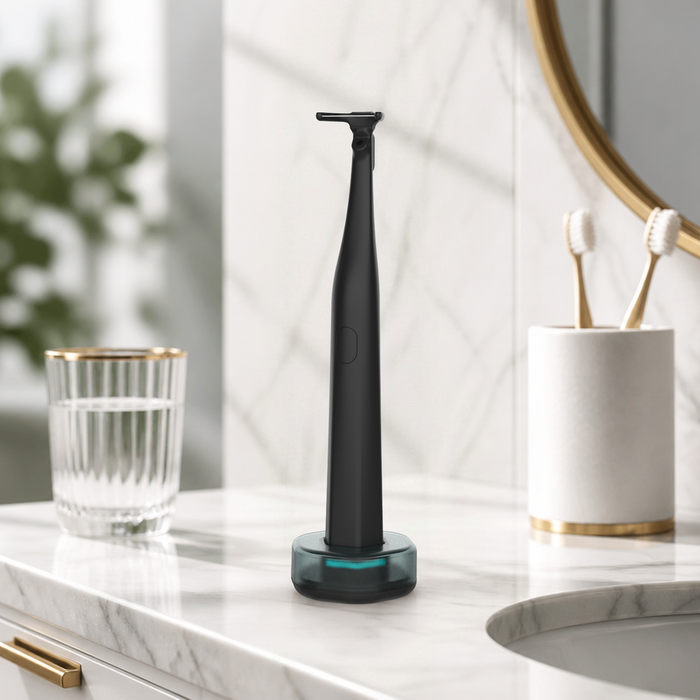
Voraiya Oral Station — Designed for Everyday Retainer Care
The Voraiya Oral Station combines 45kHz ultrasonic cleaning technology with a simple, water-based cleaning process. Instead of relying on complicated cleaning routines or frequent chemical soaking, users can complete their daily cleaning with just water and a single cleaning cycle.

Voraiya Oral Station
- 45kHz Precision Cleaning: Optimized frequency for cavitation bubbles that reach every groove.
- 304 Stainless Steel Cup: Detachable and easy to rinse for a more hygienic experience.
- Quiet & Compact: Designed to fit naturally on any bathroom countertop.
$79.99
Shop Oral Station →Key Features
- 45kHz ultrasonic cleaning technology
- Designed specifically for removable dental appliances
- Water-based cleaning process
- Detachable cleaning cup for easy filling and rinsing
- Compact countertop design
- One-button operation for simple daily use
How to Use an Ultrasonic Retainer Cleaner
- Fill the detachable cleaning cup with fresh water.
- Place the retainer into the water so it is fully submerged.
- Start the cleaning cycle by pressing the power button.
- Wait until the cycle is complete.
- Remove the retainer, rinse it with clean water, and allow it to dry before storing or wearing it again.
Common Mistakes to Avoid
Using Very Hot Water
Hot water can affect the shape of certain plastic retainers. Always use cool or lukewarm water unless your dental professional recommends otherwise.
Skipping Daily Cleaning
Plaque and debris can accumulate quickly on a retainer. Cleaning it regularly is usually easier than removing heavy buildup later.
Using Abrasive Cleaning Products
Avoid rough brushes, abrasive toothpaste, or household cleaning chemicals that may scratch or damage the retainer.
Reusing Dirty Water
Fresh water should be used for each cleaning cycle. Replacing the water helps maintain cleaning performance and prevents debris from remaining in the chamber.
Ignoring Manufacturer Instructions
Different retainers may require different care. Always follow the guidance provided by your orthodontist or the retainer manufacturer.
Frequently Asked Questions
How does an ultrasonic retainer cleaner work?
It uses high-frequency sound waves to create microscopic bubbles (cavitation). These bubbles loosen debris from the retainer surface, making daily cleaning easier and reaching areas brushes can't.
Can I use an ultrasonic cleaner every day?
Yes. Most ultrasonic cleaners designed for oral appliances are intended for regular daily use to maintain hygiene and prevent plaque buildup.
Do I need a cleaning solution?
Not necessarily. Many users perform everyday cleaning with fresh water alone. Compatible tablets can be used occasionally for extra disinfection.
Can ultrasonic cleaners clean other dental appliances?
Yes. Devices like the Voraiya Oral Station are designed for dentures, retainers, clear aligners, and night guards.
Does ultrasonic cleaning replace brushing?
It is an excellent addition to a routine, but you should still follow any specific care instructions provided by your dentist or orthodontist.
Final Thoughts
Understanding how does ultrasonic retainer cleaner work makes it easier to see why it has become a popular choice. By using high-frequency sound waves and water to create cavitation, it helps loosen debris from areas that are difficult to reach manually. The process is simple, gentle, and well-suited to everyday maintenance.
The Voraiya Oral Station is designed to make this routine even more convenient, providing a practical, one-button solution for keeping your retainers clean, fresh, and ready to wear every day.
Professional Retainer Care Made Simple
Experience the 45kHz difference. Keep your retainers and aligners like new with minimal effort.
30-Day Money-Back Guarantee · Fast & Free Shipping Over $50
Shop All Cleaners → View Oral Station →
This article is for informational purposes only and does not constitute dental advice. Consult your dentist for guidance specific to your appliance.
```


