




Ultrasonic Cleaners vs. Cleaning Crystals: The Ultimate Showdown for Dental Appliance Care
Share
If you've recently started orthodontic treatment or been fitted for dentures, you’ve likely been introduced to cleaning crystals or effervescent tablets. They are marketed as the "standard" way to keep dental appliances fresh. You drop a sachet into a glass of water, wait for the fizz, and assume the chemicals are doing the heavy lifting.
But as the dental industry evolves, more users are questioning this old-fashioned method. Is a passive chemical soak really enough? And what is it doing to your wallet—and your mouth—in the long run? Today, we’re doing a side-by-side comparison of Chemical Crystals and 52kHz Ultrasonic Technology.
1. The Passive Clean: How Crystals Fall Short
Cleaning crystals rely on oxidation—a chemical reaction that breaks down stains and odor-causing molecules. While they are great at surface-level whitening, they have a major fatal flaw: they cannot penetrate plaque.
Plaque is a biological film that physically adheres to your retainers. Chemicals alone cannot "un-stick" this film once it has begun to harden. This is why many crystal users notice that even after a soak, their appliances still feel "slimy" or have visible white spots (tartar). Furthermore, long-term exposure to these chemicals can leave a bitter residue that you eventually ingest.
2. The Active Clean: The 52kHz Physical Revolution
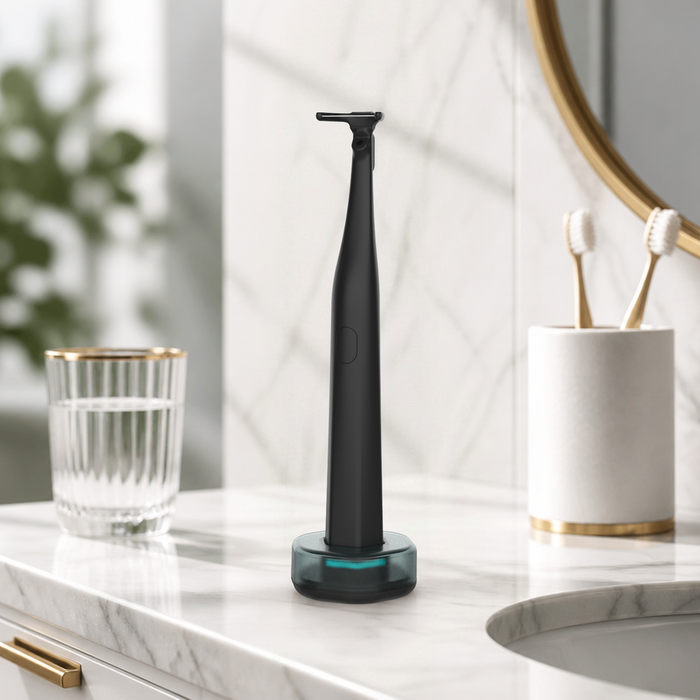
The Voraiya Oral Pod doesn't rely on chemical reactions. It uses 52kHz ultrasonic waves to perform what dentists call an "Active Clean." Through acoustic cavitation, the machine creates millions of microscopic bubbles that physically blast debris off the surface. It targets the "roots" of the plaque colonies, reaching into microscopic pores that a brush or chemical soak simply cannot access.
3. The Financial Math: One-Time vs. Recurring
Many people stick with crystals because a box costs "only" $15-$20. But let’s look at the math over a standard 18-month treatment period:
- Cleaning Crystals: $18 per month x 18 months = $324.00 (plus thousands of pieces of plastic waste).
- Voraiya Oral Pod: One-time investment of $69.99.
By switching to Voraiya, you aren't just getting a deeper, clinical-grade clean; you are saving over $250 while significantly reducing your environmental footprint. It is the definition of a "smarter" investment.
| Cleaning Dimension | Cleaning Crystals | Voraiya Oral Pod |
|---|---|---|
| Core Technology | Passive Chemical Oxidation | Active 52kHz Cavitation |
| Bacteria Removal | Surface Only | 99.9% (via UVC Light) |
| Time Required | 15 - 30 Minutes | 5 Minutes |
| Hard Tartar Removal | Ineffective | Highly Effective |
| Long-Term Cost | $200+ per year | $69.99 Total |
| Safety & Taste | Chemical Residue / Taste | Zero Residue (Uses Water) |
The Verdict: Professional Tech for Home Use
While cleaning crystals may serve as a temporary backup during a weekend trip, they are no longer the gold standard for daily care. The Voraiya Oral Pod brings dentist-office technology into your bathroom. It is faster, safer, cheaper over time, and provides a level of sanitization that chemicals simply cannot match.
UPGRADE TO THE FUTURE - SHOP VORAIYA NOWFrequently Asked Questions
Yes. Many users enjoy the extra minty freshness of using a Voraiya cleaning tablet alongside the ultrasonic cycle once a week for heavy staining. However, for daily hygiene, plain water in the pod is often more effective than crystals alone.
Absolutely. Most cheap ultrasonic cleaners require a wall plug, making them difficult to use in small bathrooms and impossible to use while traveling. Voraiya’s rechargeable design gives you total freedom.
No. 52kHz cavitation is non-abrasive. Unlike manual brushing, which can create micro-scratches that actually trap more bacteria, ultrasonic cleaning protects the smooth finish of your aligners.


