


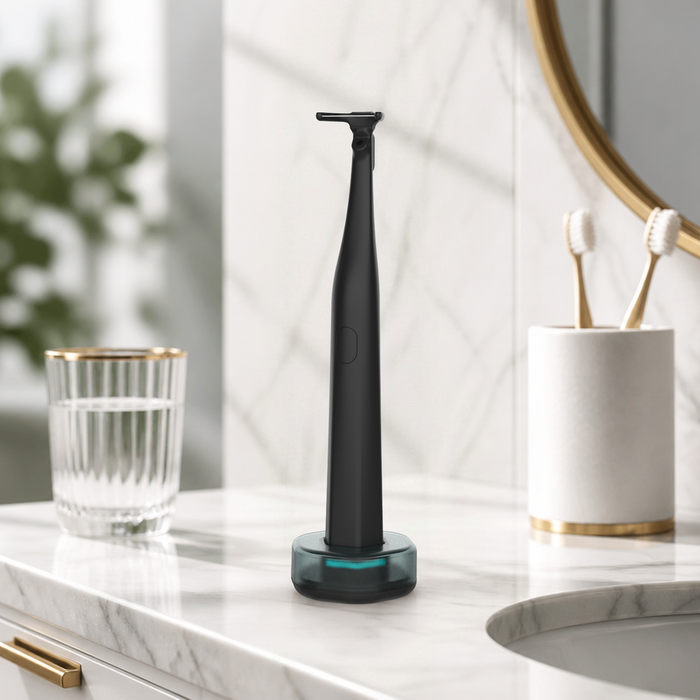


Is an Ultrasonic Retainer Cleaner Worth It?
If you wear a retainer, aligners, or a night guard, you already know how fast they can pick up odor, cloudiness, and stubborn buildup. Brushing helps, and soaking can help too, but both methods can miss the tiny grooves where biofilm hides. That is why many people eventually ask the same question: is an ultrasonic retainer cleaner actually worth it? For most daily users, the answer is yes — especially if you want a cleaner appliance with less scrubbing, less hassle, and a routine you can stick with long term.
The Short Answer
Yes, an ultrasonic retainer cleaner is worth it for most people who wear their appliance every day and want a faster, gentler, deeper clean. It is especially useful if you struggle with odor, plaque buildup, or the frustration of doing the same cleaning routine over and over again.
The people who benefit most are:
- Daily retainer or aligner wearers who want an easier routine
- Night guard users dealing with frequent buildup and smell
- People who want better cleaning without aggressive scrubbing or harsh chemicals
If you only wear your appliance occasionally, or you are already satisfied with brushing and soaking, you may not need one right away.
What It Does
An ultrasonic retainer cleaner uses high-frequency sound waves to create microscopic bubbles in water. Those bubbles collapse against the appliance surface and help lift away plaque, biofilm, and debris from hard-to-reach areas that a toothbrush often misses.
In simple terms, it works like pressure washing at a tiny scale. Instead of relying on bristles to scrape every surface, the cleaner uses cavitation to reach crevices, edges, and textured spots around the retainer or aligner.
That matters because retainers are not flat, simple objects. They have seams, curves, and tiny surface irregularities where residue can collect even when the appliance looks clean on the outside.
Who Benefits Most
The strongest use case is for people who wear a retainer or aligner every day and want a cleaning method that takes only a few minutes. Daily wear usually means more contact with saliva, plaque, and odor-causing buildup, so a consistent deep-clean routine becomes more valuable over time.
Night guard users also tend to benefit because night guards are worn for long periods and can develop odor and surface buildup quickly. A cleaner that reduces the need for repeated manual scrubbing is often easier to maintain in real life.
People with limited hand strength or dexterity may also prefer ultrasonic cleaning because it reduces the amount of brushing and handling required. That makes the process more convenient and more consistent.
Who May Not Need One
If your retainer only sees light use, or if your current brushing and soaking routine already feels easy and effective, an ultrasonic cleaner may not add enough value to justify the upfront cost. The same is true for users who are highly budget-conscious and only want the cheapest workable option.
It is also less compelling if your appliance rarely develops odor, cloudiness, or visible buildup. In that case, a basic routine may be enough for now.
Ultrasonic vs. Brushing vs. Tablets
| Method | Cleaning Depth | Time | Upfront Cost | Long-Term Cost | Convenience |
|---|---|---|---|---|---|
| Brushing only | Low to moderate | 2–3 min | Very low | Very low | Medium |
| Tablets / crystals | Moderate | 10–15 min | Low | Ongoing (~$5–8/mo) | High |
| Ultrasonic cleaner | High | 3–5 min | Medium | Low after purchase | High |
Brushing is useful, but it can miss tiny crevices and may scratch delicate plastic if done too aggressively. Cleaning tablets can help with soaking and odor, but they mainly work as a chemical assist and may not remove physical residue as completely as ultrasonic cleaning.
The key difference is that ultrasonic cleaning gives you a physical deep-clean effect without relying on harsh scrubbing. That is why it often feels like a better long-term routine rather than just another maintenance step.
For a deeper dive into why odor persists even after cleaning, see: Why Do Retainers Smell Even After Cleaning?
What It Cleans Well
Ultrasonic cleaners are especially good at removing:
- Biofilm — the structured bacterial layer that bonds to the retainer surface within hours
- Plaque and surface debris — including food particles trapped in seams and micro-grooves
- Mild odor — caused by volatile sulfur compounds produced by bacterial metabolism
- Early-stage calcium deposits — before they harden into stubborn tartar
For many users, that means the appliance looks clearer, smells fresher, and feels less gritty after cleaning. Those small improvements matter because they make the daily routine easier to keep up with.
What It Does Not Fix
An ultrasonic cleaner is not magic. It will not reliably reverse:
- Deep yellowing or severe discoloration that has penetrated the material
- Cracked or structurally damaged plastic
- Long-term warping from heat exposure
- Retainers that have exceeded their usable lifespan
It also does not mean you can ignore basic care. You still need to rinse the appliance, inspect it for wear, and avoid habits that can warp or damage it.
Cost and Value
The main reason people hesitate is the upfront cost, but that is also where the value becomes clearer. If you use your appliance every day, a one-time purchase can replace repeated manual effort and reduce your dependence on ongoing cleaning tablets.
| Approach | Year 1 Cost | Year 2 Cost | 2-Year Total |
|---|---|---|---|
| Cleaning tablets only (~$6/month) | ~$72 | ~$72 | ~$144 |
| Ultrasonic cleaner (one-time purchase) | ~$60–90 | $0 | ~$60–90 |
A practical way to think about it: if the cleaner saves you time every day, reduces annoyance, and helps you maintain the appliance more consistently, it starts to pay for itself in convenience alone. For many users, the real return is not just money saved — it is the fact that they actually stick to the routine.
How to Choose the Right One
When comparing ultrasonic retainer cleaners, the most important factors are:
- Frequency (kHz) — 40 kHz and above is the range that produces fine, effective cavitation for dental plastics
- Cycle time — 3–8 minutes is the sweet spot; too short may not clean thoroughly, too long is unnecessary for daily use
- Tank size — must comfortably fit your specific appliance without cramming
- Ease of daily use — if the setup is annoying, the cleaner will end up sitting unused
A good buying decision usually comes down to three questions:
- Does it fit your appliance comfortably?
- Does it clean in a short, realistic cycle?
- Will you actually use it every day?
For dental appliances, the cleaner should be designed for delicate plastics and everyday appliance care, not repurposed from random household cleaning tasks.
Our Recommendations
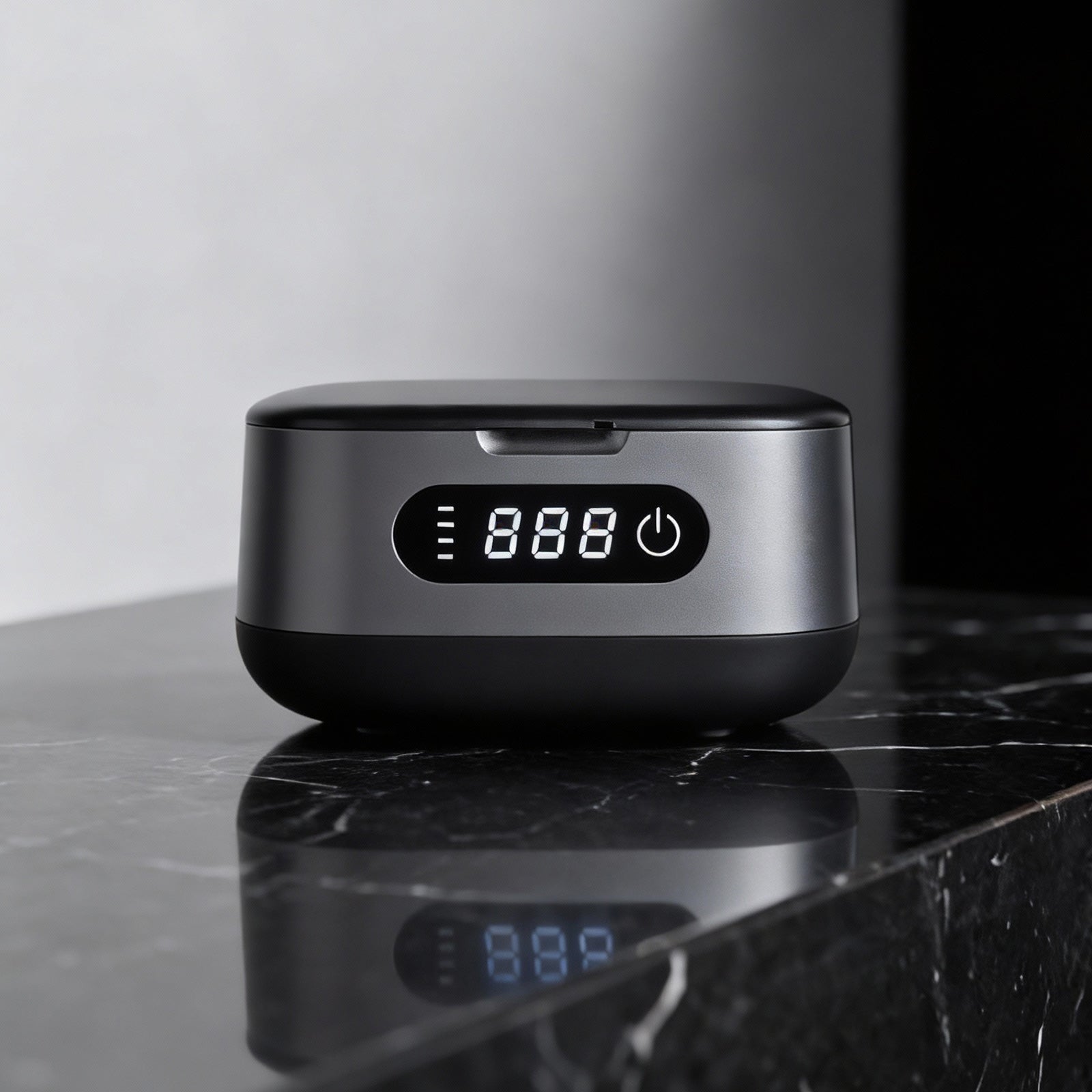
Voraiya Oral Pod
- 45–52 kHz precision frequency — fine, thorough cavitation for all appliance types
- 3 smart modes — Quick Wash (3 min), Standard (5 min), Deep Sanitization (8 min)
- 166 ml compact tank — fits on a desk, nightstand, or in a travel bag
- One-touch operation — no settings to configure; designed for real daily use
- Works with retainers, aligners, night guards, and dentures
- 1-year warranty
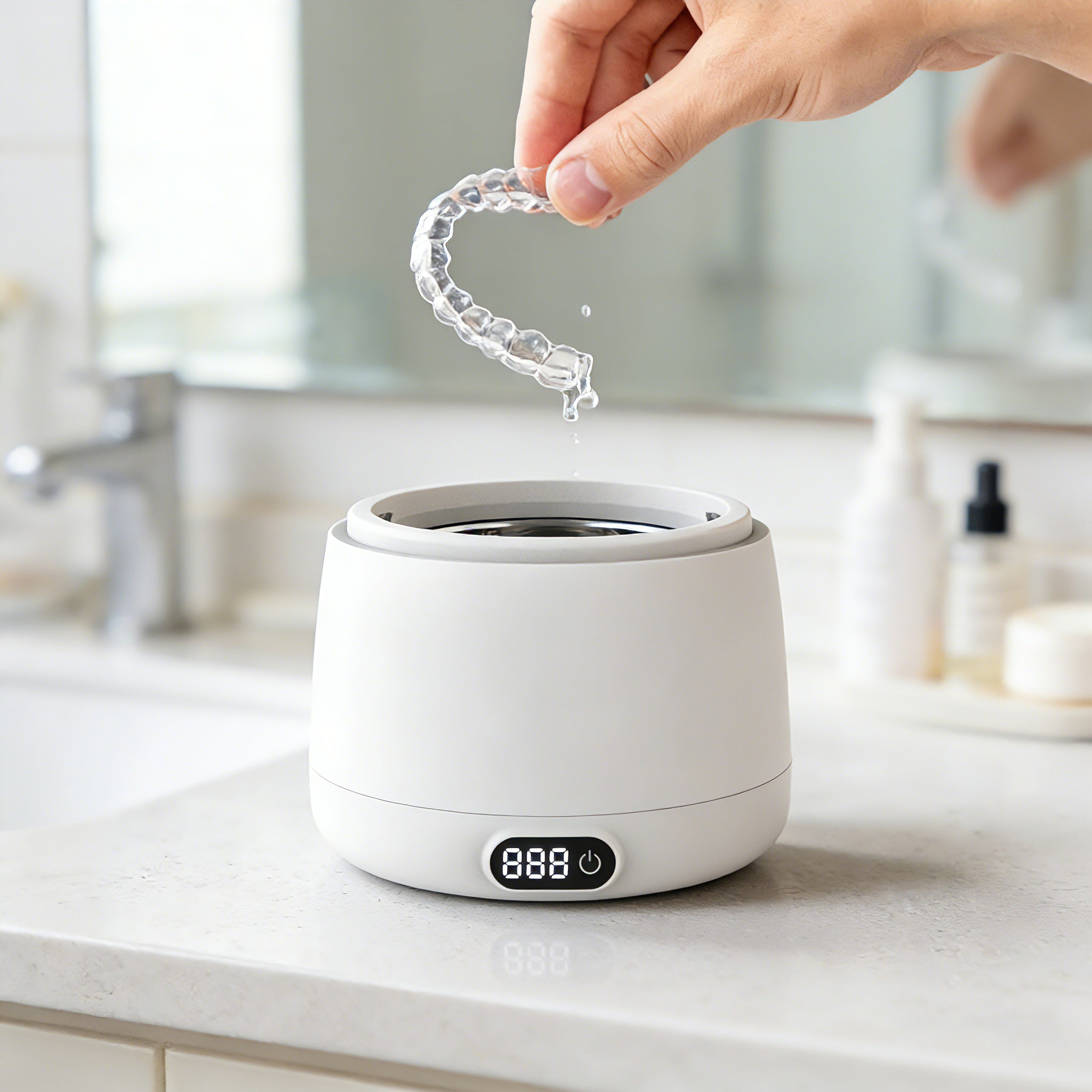
Voraiya Oral Station
- 45 kHz ultrasonic frequency — high-density cavitation for thorough biofilm removal
- UV-C sterilization — eliminates 99.9% bacteria in a single 6-minute cycle
- No chemicals required — just water; zero recurring costs
- Universal compatibility — retainers, aligners, dentures, night guards
- Larger tank — more room for full-arch appliances
- 30-day money-back guarantee + 1-year warranty
Safe Use Basics
- Use cool or room-temperature water only. Hot water can warp clear plastics and create avoidable damage.
- Keep cycle time within the recommended range for dental appliances (3–8 minutes for most devices).
- Rinse the appliance after cleaning and allow it to air-dry before storing in a clean case.
- Inspect regularly for cracks or wear. Ultrasonic cleaning is meant to complement good care, not replace common sense.
For more on safe retainer care practices — including what not to use — see: Can You Use Denture Cleaner for Retainers?
Is It Worth It for You?
✅ Worth it if:
- You wear your appliance daily
- You want a deeper clean with less manual effort
- You struggle with persistent odor or cloudiness
- You prefer a routine that feels effortless enough to stick with
- You want to stop buying tablets every month
⚠️ May not be necessary if:
- You only wear your appliance occasionally
- You rarely experience buildup or odor
- You want the absolute lowest-cost option and are happy with basic brushing
FAQ
Can I use an ultrasonic cleaner on clear retainers?
Yes. Clear retainers (Essix-style, Invisalign-style) are one of the primary use cases for ultrasonic cleaning, as long as you use the device correctly and avoid hot water.
Will it damage my retainer?
Not when used properly. The main risks come from misuse — hot water, excessive cycle times, or using a machine not designed for dental plastics. A purpose-built dental ultrasonic cleaner operating at 40–52 kHz is safe for daily use on retainers, aligners, and night guards.
Do I still need to brush my retainer?
A quick rinse before and after is good practice. For most users, ultrasonic cleaning replaces the need for vigorous brushing — but basic rinsing and occasional visual inspection still matter.
Is UV sterilization necessary?
UV-C can be a helpful additional feature that kills bacteria the ultrasonic cycle has already dislodged from the surface. The core cleaning value still comes from the ultrasonic cavitation itself. UV is a bonus layer of sanitization, not a requirement.
How often should I use it?
For daily wearers, daily use is the most compelling routine — and it is what ultrasonic cleaners are designed for. A 3–6 minute cycle each day keeps biofilm from ever building up to problematic levels.
Can I use it for dentures and night guards too?
Yes. Both Voraiya models are compatible with full and partial dentures, night guards, sports mouth guards, and all types of clear aligners. The cleaning mechanism is the same regardless of appliance type.
Final Take
For most daily users, an ultrasonic retainer cleaner is worth it because it makes cleaning easier, more consistent, and more effective than brushing alone. The real benefit is not just a cleaner-looking appliance — it is a routine you can actually keep up with.
The cost pays for itself quickly when compared to the ongoing expense of cleaning tablets, and the time savings compound every single day. If you have ever found yourself skipping retainer cleaning because it felt like too much hassle, that alone is a strong signal that an ultrasonic cleaner would make a meaningful difference for you.
Ready to simplify your retainer routine?
Voraiya Oral Station — 45kHz Ultrasonic + UV-C Sterilization.
Deep cleaning in 6 minutes. No chemicals. No recurring costs.
700+ Verified Reviews · 30-Day Money-Back Guarantee
Shop the Oral Station →This article is intended as a general buying guide. For clinical questions about retainer care specific to your treatment, consult your orthodontist or dentist. For more retainer cleaning resources, visit the Voraiya Retainer Cleaner Collection.


