


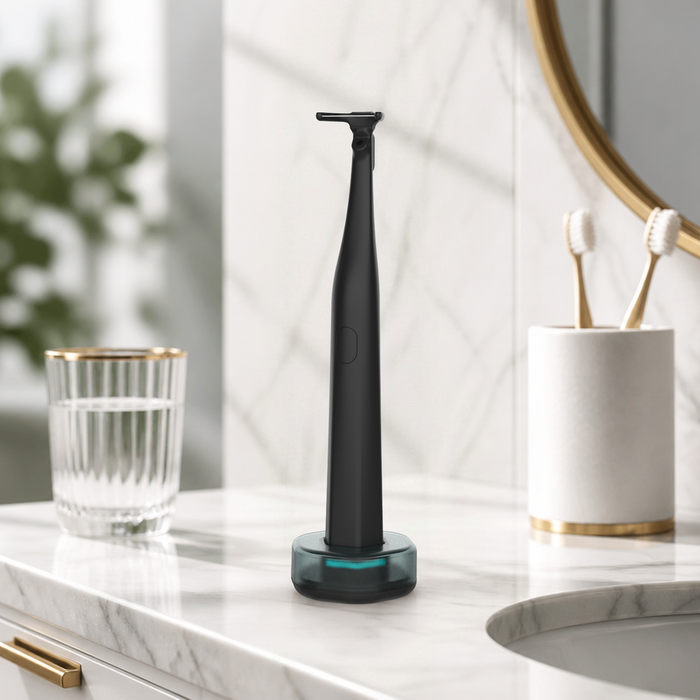


Ultrasonic Dental Cleaner Guide: What It Is, How It Works, and Who It's For
What "Ultrasonic Dental Cleaner" Actually Means
If you've searched for "ultrasonic dental cleaner," you've probably noticed that the term can refer to two very different types of devices. One is a professional ultrasonic dental scaler used by dentists and hygienists during dental cleaning appointments. The other is a home ultrasonic cleaner designed for removable dental appliances such as Invisalign aligners, clear retainers, dentures, and night guards.
This guide focuses on the second type — a home-use ultrasonic dental cleaner. At Voraiya Oral, we specialize in ultrasonic cleaning solutions designed to help people maintain their removable dental appliances more conveniently at home.
In this article, we'll explain how ultrasonic dental cleaners work, what they can and cannot clean, whether they are safe for retainers and aligners, and what to consider when choosing one.
Two Very Different Devices, One Confusing Name
| Feature | Professional Dental Scaler | Home Ultrasonic Appliance Cleaner |
|---|---|---|
| What it touches | Your actual teeth and gums during a professional dental cleaning | A removable appliance such as an Invisalign aligner, retainer, denture, or night guard — never your mouth directly |
| How it works | A vibrating metal tip powered by ultrasonic technology and operated by a trained dental professional | A water-filled cleaning chamber that uses high-frequency sound waves to create cavitation bubbles that help loosen debris and buildup from appliance surfaces |
| Who operates it | A dentist or dental hygienist | You at home as part of your dental appliance cleaning routine |
| Contact with the body | Direct contact with teeth and gums | No direct contact with your body. The appliance is removed before cleaning |
| Purpose | Professional removal of plaque and tartar from teeth | Daily maintenance and cleaning of removable dental appliances |
| Common users | Dental patients during professional cleanings | People who wear Invisalign, clear aligners, retainers, dentures, and night guards |
This difference is important because many online discussions about "is ultrasonic cleaning safe" are actually referring to professional dental scalers rather than home ultrasonic cleaners. A home ultrasonic retainer cleaner works in a completely different way because it cleans the appliance after it has been removed from your mouth.
What a Home Ultrasonic Dental Cleaner Can Actually Do
A home ultrasonic dental cleaner uses high-frequency sound waves to create millions of tiny bubbles in water. When these bubbles collapse, they produce a gentle cleaning action called cavitation, helping remove buildup from small grooves, edges, and hard-to-reach areas that a toothbrush may miss.
For people who wear Invisalign aligners, clear retainers, dentures, or night guards, ultrasonic cleaning can be a convenient way to maintain appliance cleanliness between regular replacements or professional care.
In practical terms, an ultrasonic dental cleaner can help with:
- Removing surface plaque and biofilm buildup from retainers, aligners, dentures, and night guards
- Reducing unpleasant odors caused by bacteria and trapped debris
- Cleaning small grooves and areas that are difficult to reach with manual brushing
- Keeping removable dental appliances fresher and more comfortable for daily use
What It Cannot Do
Understanding the limitations of ultrasonic cleaning is just as important as understanding its benefits. An ultrasonic cleaner is designed for appliance maintenance, not as a replacement for professional dental care.
- It does not replace professional dental cleanings because it cleans your appliance, not your teeth.
- It may not remove heavily hardened tartar-like deposits that have accumulated over a long period without regular cleaning.
- It cannot repair cracked, damaged, or permanently discolored retainers or aligners.
- It should be used together with proper daily oral hygiene and the cleaning instructions provided by your dentist or orthodontist.
Who Should Be Careful With a Home Ultrasonic Appliance Cleaner
Because a home ultrasonic dental cleaner does not directly touch your teeth or gums, the main safety considerations are about protecting your appliance and using the device correctly.
- Check your retainer, aligner, denture, or night guard before cleaning. Appliances with cracks, loose parts, or visible damage should be inspected before use.
- Some dental appliances may contain delicate components, metal parts, attachments, or special materials. Always follow the cleaning recommendations provided by the manufacturer or your dental professional.
- Avoid using cleaning solutions or chemicals that are not recommended for your specific appliance, as some substances may affect the material over time.
- If your dentist or orthodontist has provided specific cleaning instructions for your appliance, those instructions should always take priority.
How to Choose a Home Ultrasonic Dental Cleaner
When choosing an ultrasonic dental cleaner for Invisalign aligners, retainers, dentures, or night guards, focus on practical features that match your daily cleaning needs rather than only looking at marketing claims.
Ultrasonic frequency. Most consumer ultrasonic dental cleaners operate within the 36–52kHz range. This frequency range is commonly used for cleaning removable dental appliances because it provides effective cavitation while remaining gentle enough for regular home use.
Cleaning capacity. Consider the size of the cleaning chamber based on the appliances you plan to clean. A compact cleaner may be enough for a single retainer or aligner, while a larger chamber may be more convenient for dentures, multiple retainers, or night guards.
UV-C technology. Some ultrasonic dental cleaners combine ultrasonic cleaning with UV-C light technology. Ultrasonic waves help loosen debris and buildup, while UV-C light provides an additional cleaning step.
Ease of use. Features such as detachable cleaning cups, simple controls, and easy water replacement can make your daily retainer or aligner cleaning routine faster and more convenient.
Looking for an Ultrasonic Cleaner for Your Retainer or Aligners?
A high-quality ultrasonic dental cleaner can make daily appliance care easier by helping remove buildup from areas that traditional brushing may not fully reach.
The Voraiya Oral Station Ultrasonic Cleaner is designed for cleaning Invisalign aligners, clear retainers, dentures, and night guards at home. With 45kHz ultrasonic cleaning technology and a detachable cleaning cup design, it provides a convenient solution for maintaining removable dental appliances.
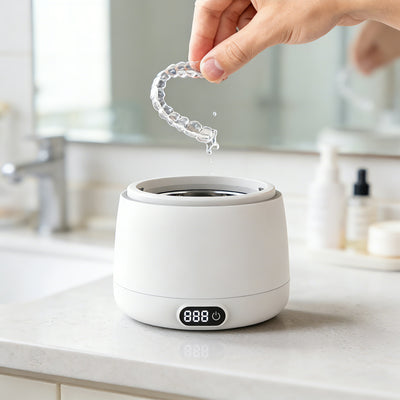
Voraiya® Oral Station
- 36~40kHz Deep cleaning ultrasonic power
- Dual UV-C Lamps for 99.9% clinical sanitization
- Detachable Cup for 100% water & electricity separation
- 4 Smart Modes for customized dental care
Frequently Asked Questions About Ultrasonic Dental Cleaners
Can I use an ultrasonic dental cleaner for Invisalign aligners?
Yes. Many Invisalign users and clear aligner wearers use ultrasonic cleaners to help keep their aligners cleaner and fresher. However, always follow the cleaning instructions provided by your orthodontist or Invisalign provider.
Is an ultrasonic cleaner safe for retainers?
For most removable retainers, ultrasonic cleaning is a gentle cleaning method when used correctly. Avoid cleaning retainers that are cracked, damaged, or made from materials that are not recommended for ultrasonic cleaning.
How often should I use an ultrasonic retainer cleaner?
The ideal cleaning frequency depends on your appliance type and personal routine. Many users clean their retainers or aligners several times per week, while others prefer daily cleaning.
Does an ultrasonic dental cleaner remove bacteria?
Ultrasonic cleaning helps remove debris and buildup where bacteria can accumulate. Some models also include UV-C technology, which provides an additional surface-level cleaning function.
Can an ultrasonic cleaner replace brushing my retainer?
An ultrasonic cleaner and brushing serve different purposes. Brushing helps remove loose debris, while ultrasonic cleaning helps reach small areas and grooves that are difficult to clean manually.
Want to Learn More About Dental Appliance Cleaning?
If you want to learn more about ultrasonic cleaning technology and how to care for removable dental appliances, explore these related guides:
- How ultrasonic cleaning works step by step: How Does an Ultrasonic Retainer Cleaner Work?
- Comparing different cleaning technologies: Sonic vs. Ultrasonic Retainer Cleaners
- Understanding UV-C and ultrasonic cleaning: UV-C vs Ultrasonic Cleaning: Which Kills More Bacteria?
- For night guard users: Best Ultrasonic Night Guard Cleaner
Keeping Invisalign aligners, retainers, dentures, and night guards clean is an important part of maintaining comfort and extending appliance usability. With the right ultrasonic dental cleaner and proper cleaning habits, removable dental appliances can be easier to maintain every day.


