




Retainer Cleaner

Bundles
Everything your retainer needs — bundled at a better price. VoraiyaOral kits pair our ultrasonic cleaners with the accessories that complete your routine. Less to think about, more to save. FSA/HSA eligible on qualifying bundles.
Our Products
Beyond Dental: What Else Can You Clean?
Ultrasonic cavitation isn't a dental-specific technology — it's a physical cleaning process that works on any small, non-porous item that fits in the tank. While Voraiya was engineered first for dental appliances, the same 52kHz cavitation action extends naturally to a wide range of everyday items.
Commonly cleaned alongside dental appliances:
-
Jewelry
— rings, earrings, and necklaces, especially pieces with intricate settings where dirt and oils collect in small crevices
-
Eyeglasses
— lifts smudges, oils, and grime from lenses and frame hinges without the scratching risk of wiping with a cloth
-
Watches and watch bands
— non-submersible components excluded, most metal and silicone bands can be cleaned safely
-
Coins and small metal objects
— removes surface tarnish and grime
-
Makeup brushes
— dislodges embedded product buildup from bristles
Because the cleaning action comes from physical cavitation rather than a dental-specific chemical, the same device that cleans your retainer each morning can also refresh your jewelry or glasses in the evening.
Why One Device Beats Owning Several
Most households end up with a drawer full of single-purpose gadgets: a jewelry cleaner, a retainer cleaner, maybe a glasses-cleaning kit. Each one takes up space and gets used less often simply because it's one more thing to remember.
Consolidating into one multi-purpose cleaner means:
-
One device to keep charged, maintained, and easy to find
-
Lower total cost than buying separate single-purpose machines
-
One consistent 5-minute routine, regardless of what you're cleaning
-
Less clutter on your counter or in your drawers
A single Voraiya unit placed on your counter can move seamlessly between your morning retainer routine and an occasional jewelry refresh — you don't need a separate machine for each.
Best for — Who This Is For
Anyone who values a considered bathroom aesthetic
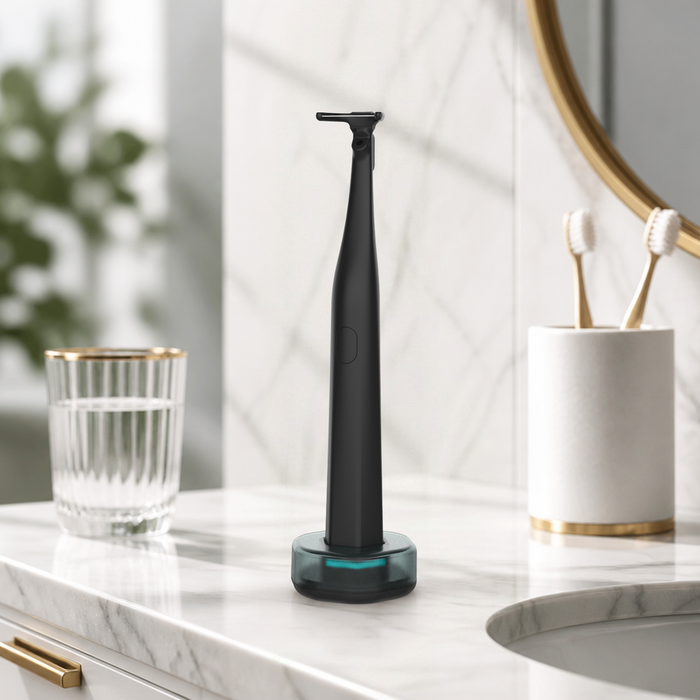
If your bathroom counter is curated — skincare, a diffuser, minimalist organizers — a cleaner that looks purely clinical stands out for the wrong reasons. Voraiya's design was created to complement, not clash with, that space.
People building a first consistent cleaning habit
If you've struggled to stick with soaking tablets or manual brushing, having a visible, simple device on your counter — rather than tucked in a cabinet — makes it far easier to build a habit that sticks.
Couples or roommates who each have their own routine
Even without sharing a single device between many people, having a dedicated home-base cleaner means neither person has to remember to pack or borrow anything — it's simply always there.
Why Choose Voraiya?
Physics-Calibrated Frequency
52kHz balances cleaning power with material safety
Dense, Even Cavitation
Reaches microscopic grooves without aggressive bubble action
Safe for Thin Thermoplastics
Engineered specifically for dental appliance materials
5-Minute Cycle
Fast, consistent results backed by cavitation physics
Explore More Collections
-
Ultrasonic Retainer Cleaner
See how 52kHz compares directly to standard 40kHz cleaners.
-
Ultrasonic Aligner Cleaner
Learn the clinical research behind daily aligner biofilm removal.
-
Denture Hygiene Center
Dedicated ultrasonic cleaning backed by 2024 clinical research.
-
Multi-Purpose Cleaner
See what else 52kHz cavitation can clean beyond dental appliances.
-
Best Sellers
Our highest-rated cleaners ranked by verified reviews.
Frequently Asked Questions About Retainer Cleaners
Frequency determines the size and density of cavitation bubbles, which directly affects both cleaning power and the risk of surface damage — a higher-power but poorly-matched frequency can actually be less effective or more damaging than a well-calibrated one.
No. Higher frequencies produce smaller, gentler bubbles suited to delicate items, while lower frequencies produce larger, more aggressive bubbles suited to heavy industrial parts. The right frequency depends on the material being cleaned, not simply which number is highest.
Lower frequencies like 20–40kHz produce larger, more forceful bubbles designed for metal and heavy-duty parts. Applied to thin dental thermoplastics, this level of force is unnecessary and can be harder on delicate surfaces over time.


